
Get to know us!
Our Values

Affordability

Empowerment

Equity
Our Mission
At Level the Curve, we aim to make everyday life easier for people by creating products that adapt to the customers' needs and wants, and at a low price.
The result is a consumer-oriented approach which caters specifically to, as our name suggests, "leveling the curve" as well as the "playing field" for the disabled community.
Our Story
Level the Curve - Our Story
-
The following is a transcript of the video:
Ghavin [Offscreen]: What is your injury backstory?
[Eli (Co-Founder/C-O-O)]: I was twenty years old when I fell off of a balcony and broke my neck. And I knew almost immediately that life was going to be very different for me. I remember trying to get up once I fell off that balcony, and the signal not reaching my legs, and I knew that I was in for some trouble.
[Stefan (Co-Founder/C-E-O)]:When I was 14 years old I was in a car with my aunt. She lost control of the car. The airbag popped. It snapped my neck back and made me a C5/C6 quadriplegic
[Eli]:June 30th, 2012. That is a date that has become a second birthday of sorts. It's always a day of reflection and solemn repose-- and we've been through five of them so far. Given my limitations with dexterity I found myself working twice as hard to reach the same level of independence that I had before the accident and before the accident I was independent to a fault, I guess you could say.
[Stefan]:When I was at home I wasn't able to use my bicep curls to pick up a cup per se No one ever taught us actual things we would need from our bodies in order to have the flexibility range and dexterity to do normal everyday tasks like put on your pants, Your shirt, tie a tie, put on a jacket Things that you actually need in your life. And therapy and most ways of going about training someone to get out and rehabilitate them didn’t work for this aspect. You develop a bit of a learning curve that you need to do these applications that no one else will teach you how to do.
[Khan (Co-Founder/Chief Engineer)]:I met Stefan back in high school shortly after his injury. We became very close friends, very quickly and we would talk about how his life was before the incident, after the incident… and even found out he used to be a runner. He used to be a very independent person. He needed an aide to help him write notes during class, he needed the aide to help him eat during lunch in the cafeteria, and I always believed that there must've been a way to help him become more independent and get back to how he was in the past. As we got older, and we both went to engineering school, we used to talk about making different products that make his life a lot easier. We even got to the stages where we started making prototypes of random devices that could make his life...more adaptive, let’s say.
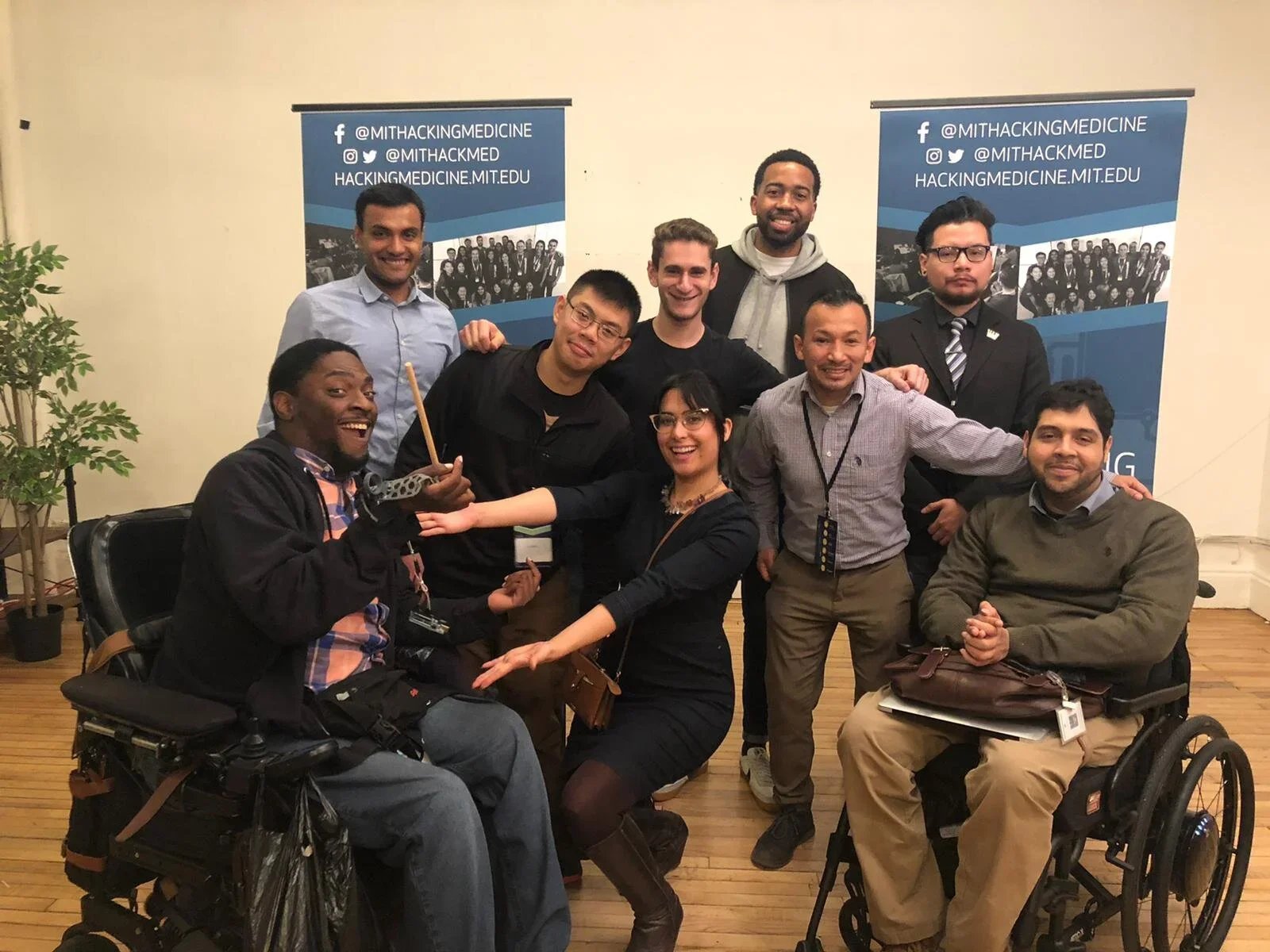
[Stefan]:Later on in life, we met Eli again at the Axis Project. He was a friend of mine previously at Brooklyn Tech, and I found out that over the years, in the time that we had lost touch with each other, he became disabled. And it broke my heart to find that out, but in a sort of strange way it became beneficial towards all of us, because we then decided as a group we would try to make everyone's life easier by making products that would not only assist me, or Eli, but anyone else who became disabled.
[Eli]:Because of that unique perspective I think what separates us from other firms is that we have lived the experience… we continue to live the experience… we were independent before our injuries, and we continue to be independent even after. So we understand what it takes to get from point A to point B, and what we want to do as a company is empower those with a similar background and a similar story to be able to do the same.
[Khan]:What makes us, Level The Curve, different from others is our approach to the market. Our products are designed to be affordable, they’re direct to consumer, they are replaceable if needed, they’re aesthetically pleasing, they’re sleek, safe to use…
[Stefan]:They don’t want to feel like they’re making a huge scene whenever they take out something that they need to use in order to make their situation easier. They want to have something that can give them a sense of discretion, or something that can make them feel prideful in what they’re using.
[Khan]: Our idea is to allow people with disabilities to use our products and essentially… level the curve. At Level The Curve, we aim to make everyday life easier for people by creating products that adapt to the customers' needs and wants, and at a low price. The result is a consumer-oriented approach which caters specifically to, as our name suggests, "leveling the curve,” as well as the "playing field" for the disabled community.